I probably missed it - but what's the best way to use a Meanwell 200w PSU to power a system with a GPU that requires an external connector? (e.g. RTX 4060 LP). Right now mine is powering my low wattage CPU + GTX 1650 LP PSU, which gets it's power from the PCIe rail. Just using a regular plugin unit for the DC-ATX portion of the PSU.
I'd like to upgrade my GPU but don't want to spend the extra $$ on the HDPLEX 250w unit.
It might not be enough to reasonably power a 4060 as well. I'm seeing online they tend to run upwards of ~125W at full tilt on their own. Your build seems like it's relying on the CPU fan to put air over the PSU, which is almost certainly MUCH less than the 10 CFM of direct airflow the RPM-200 specs for its full 200W rating. This airflow matters a lot, and it's actually a big reason why my PSU was crapping out on me in my earlier posts in this thread. I'll post an update about that at some point. Even with a full 200W rating, I'd be a bit skeptical it's going to work with how modern GPUs have large transient power spikes.
No harm in trying, though. You (probably, don't quote me on this) won't hurt anything, it'll just crash your games / PC sometimes. If event viewer says the GPU was disconnected, it's almost certainly overloaded.
The first post in this thread has a lot of great info about connecting GPUs and using the right wires, but at this point all of the image links are dead so I'll give you a brief summary of what you'll need to do here.
Basically, you just need to get a PCIe power connector and splice the 12V and GND into your existing wiring setup. This is pretty easy overall. There are two main ways to get a PCIe power connector with wires:
1) Make one from scratch
Note that this is NOT an EPS connector for CPU power, and it is NOT what you'll find if you search for and 8-pin Mini-Fit Jr. receptacle. The keying is different. It is a
Molex 455870004, which you will need along with some
Mini-Fit Jr. terminals. Get the 16AWG terminals, and use 16AWG wire. You can use 18AWG wire if you want, but see if one of the reviewers has checked how much power this particular 4060 (not just any 4060) pulls from the slot vs wires. If it pulls mostly from the slot 18AWG is fine.
2) Scrap another cable
The much easier way is to take an extender, sleeved cable, 2x6pin->8pin adapter, really anything that has that PCIe power connector, and chop it. The GPU might even come with an adapter you can use. This is what I did for my build, which is a few posts above. I cut the whole thing about 2" from the connector.
After that, it's just a matter of getting it connected to the rest of your system. Use
this post about PCIe power for your pinout and an explanation of why you'll end up with five GND wires, but only three 12V wires. I can't tell from your build log exactly how you run your 12V through the system, but all you need to do is connect 12V to 12V and GND to GND. Just make sure you aren't putting more power through something than it's comfortable with; I wouldn't hook it up to the HDD power connector on your PicoPSU since they say no more than 3A through it.
And always, ALWAYS check your wiring with a multimeter afterwards. I'm not responsible for any bricked parts, fires, or whatever else you manage to do.
I could give some more recommendations on that if I knew more about your setup in particular. How many 12V wires do you run throughout the system, and how big are they? Do you collect the PSU's three 12V and three GND wires right at the RPS-200, or at the PicoPSU? Wherever you do that will be the best spot to add in the GPU power wires.


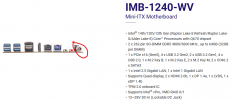

 .... hence trying my luck connecting to the internal connector.


