Articles

More Power for Less Money: Build Your Own Steam Machine

Image Credit – Valve

Article written by Christopher Moine, Senior Editor SFFN


Valve had a rough day yesterday. The Steam Machine came to market packing much less power than it should, and costing far more money than everyone  hoped. Admittedly, it’s not entirely Valve’s fault. The AI induced RAM and NAND crisis had a large part to play in the matter. Valve won’t say what they wanted to price the Steam Machine for originally, but $699 to $799 is what was originally rumored. Even at that price, with the specs it has, it wasn’t going to be an easy sell against established gaming consoles such as the PS5 and Xbox Series X; both of which can match the Steam Machine’s performance. The value of the Steam Machine was going to be in the freedom it gave users to decide how to use that power themselves, while also giving casual gamers an easy on-ramp to the world of PC gaming.

However, that’s not what happened. Instead we got a PC game console with about the same power as the Xbox Series X, for substantially more money. Remember, that it wasn’t long ago that the Xbox Series X was selling for $350 brand new during sales. Sadly, the price has risen to $649 (Best Buy, USA) as of the time of writing, but Steam Machine starts at an eye-watering $1,049 (US). That doesn’t include a controller, disc drive, and it has half the storage memory of the Xbox Series X. As a gaming machine, it’s priced way out of its league. This is especially true when you can buy a PS5 Pro, which has substantially higher performance than the Steam Machine, for only $899. Don’t forget that the PS5 Pro has 2TB of storage, includes a controller, and has access to Sony’s first party library of games.

Of course, consoles are a closed eco-system with a curated gaming experience. You rarely get to choose the settings of your games, and they are pretty terrible for anything but gaming and media playback. Watching YouTube on them is fine, but you aren’t going to be doing any actual work. Steam Machine, with SteamOS, has full PC functionality. SteamOS is Linux after all, and you can always install MS Windows if you want to.

The other thing that the Steam Machine has going for it is that it’s a great looking and well designed piece of hardware. It ticks all the SFF vibes for me, and there is a small part of my brain looking for justification to own one. The swappable front panels can be fun, and it really triggers a lot of GameCube vibes. It is upgradeable as  far as memory and storage go, but you won’t be swapping anything else out. I do like the cooling the system. It’s a real shame about the price.

Now, let’s do our own SFF Steam Machine style build. For this concept, my rules are that it must exceed the Steam Machine’s performance, be more capable, upgradeable, be a truly SFF computer, and be approximately the same price range. Additionally, I’m going to limit myself to easily accessible online purchasing from Amazon and NewEgg.


Build Your Own:


CASE: Silverstone Sugo 16 for $93 at Amazon US. 

There are a lot of case options when it comes to SFF, however, I felt somewhat obligated to try to match the cube styling of the Steam Machine for this build. While not as small, the Silverstone Sugo 16 meets that need. Available in white, black, or pink (seriously?!), the Sugo 16 is a good looking case with excellent cooling abilities.It supports GPUs up to 275mm long and 2.5 slots wide, full ATX and SFX PSUs, and CPU coolers as tall as 172MM or 120mm AIOs. When I last built in the Sugo 16, I used a 16-core Ryzen 5950X CPU and RTX 3060Ti with no issues and good cooling results.

Ugh…one of my early videos. Why did I think sounding robotic was a good idea?

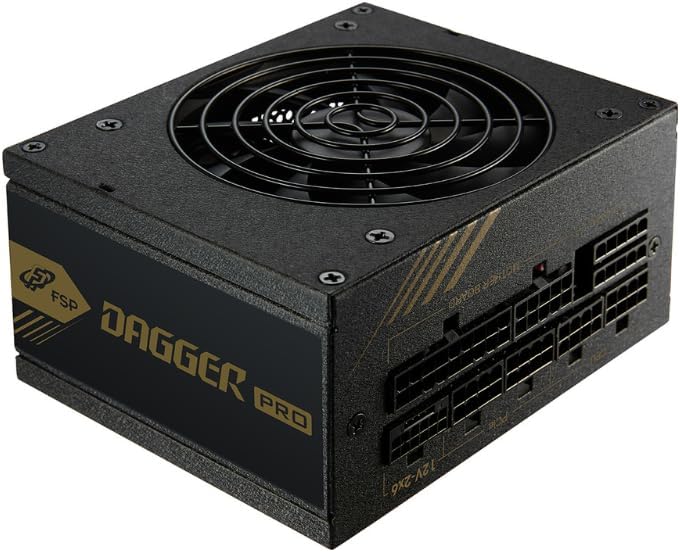
Power Supply: FSP Dagger Pro 850W SFX PSU for $149 from Amazon US.

We reviewed the FSP Dagger Pro 850W when it debuted in 2022, and found it to be a good choice. Since that time, I stuffed our unit into Louqe RAW S1 case along with a 12600K and RTX 3070. It has been tortured with thousands of hours gaming . For those that don’t know, the RAW S1 is probably one of the cruelest cases for a PSU to suffer in. The PSU exhausts into a closed aluminum sidewall with minimal airflow. It gets very hot. Our long-term test unit has handled it without any issues. At 850 watts, it should provide all the power you will need for this build, and leave room to upgrades down the road.
 

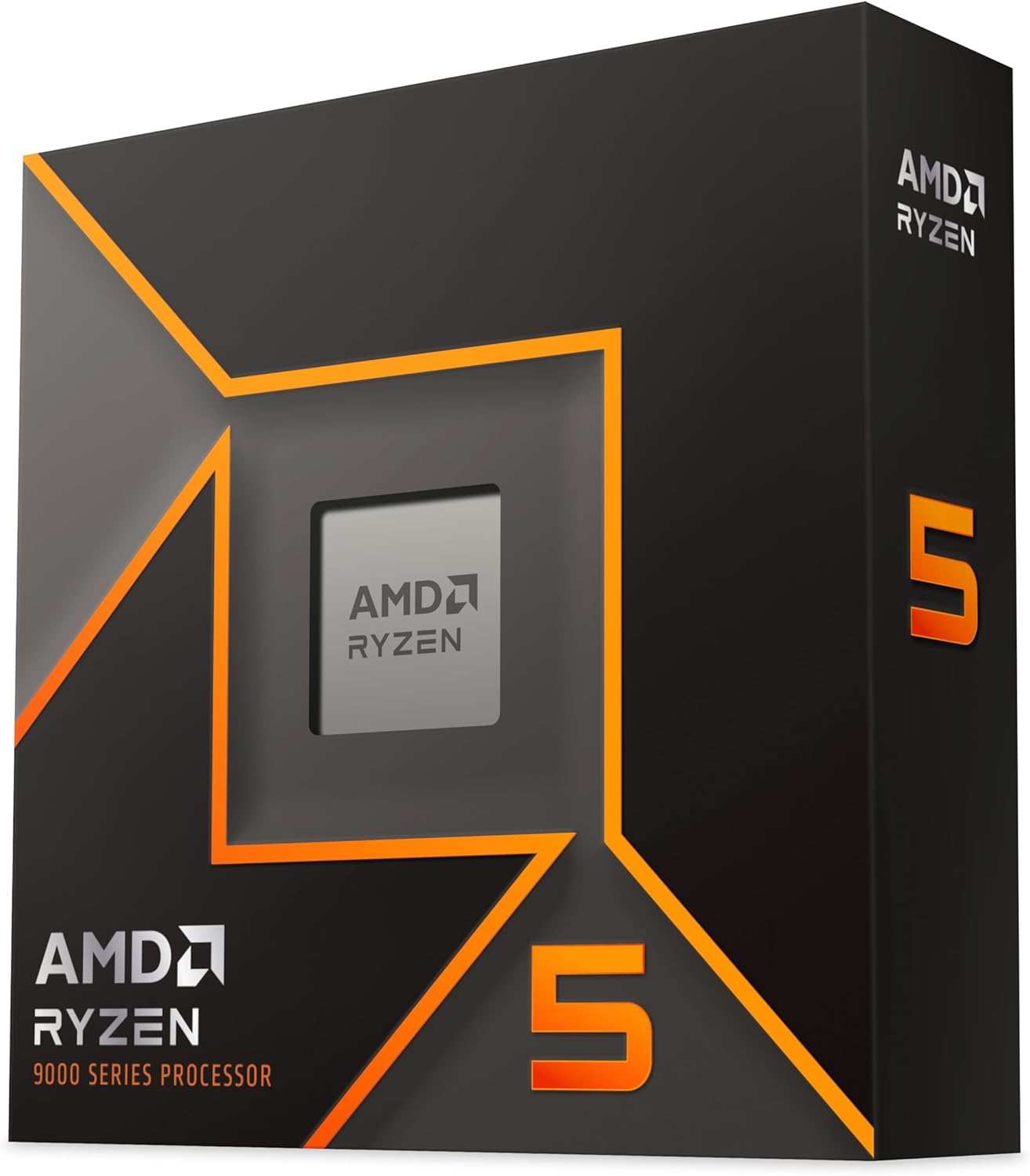
CPU: AMD Ryzen 5 9600X for $177 at Amazon US.

The Zen 5 powered Ryzen 5 9600X is a substantially better performing CPU than the Steam Machines 35 Watt power limited Zen 4 processor. Both have have six cores with twelve threads, but the 9600X will be able to truly stretch its legs with boost clocks over 5 Ghz. The native support for AVX-512 also allows for some excellent emulation support, and the AM5 socket allows for more powerful CPU upgrades down the road. Alternatively, you can get a 6-core Ryzen 7600X for slightly less, or an 8-core Ryzen 7800X for slightly more.
 

The Intel Core Ultra 7 270K would be an excellent alternative, particularly if you are looking to do production work. This 24 core CPU (8 performance and 16 efficiency cores) is a production powerhouse for creative work loads, while still being very good for gaming. Currently priced at $264 on Amazon (US), it offers a very compelling alternative to the Ryzen CPU.  It does run hot though. That’s no problem in the Sugo 16, but could be and issue in smaller cases. The reason I did not choose it though, is that I couldn’t find a comparable bundle to bring the price in-line with my goal, and it did not fit our “upgradeable” rule. Intel is already planning to switch sockets again, while AMD has committed to at least one more generation on the AM5 socket.  That said, if I had the spare money, I wouldn’t hesitate to choose it over the Ryzen 9600X.

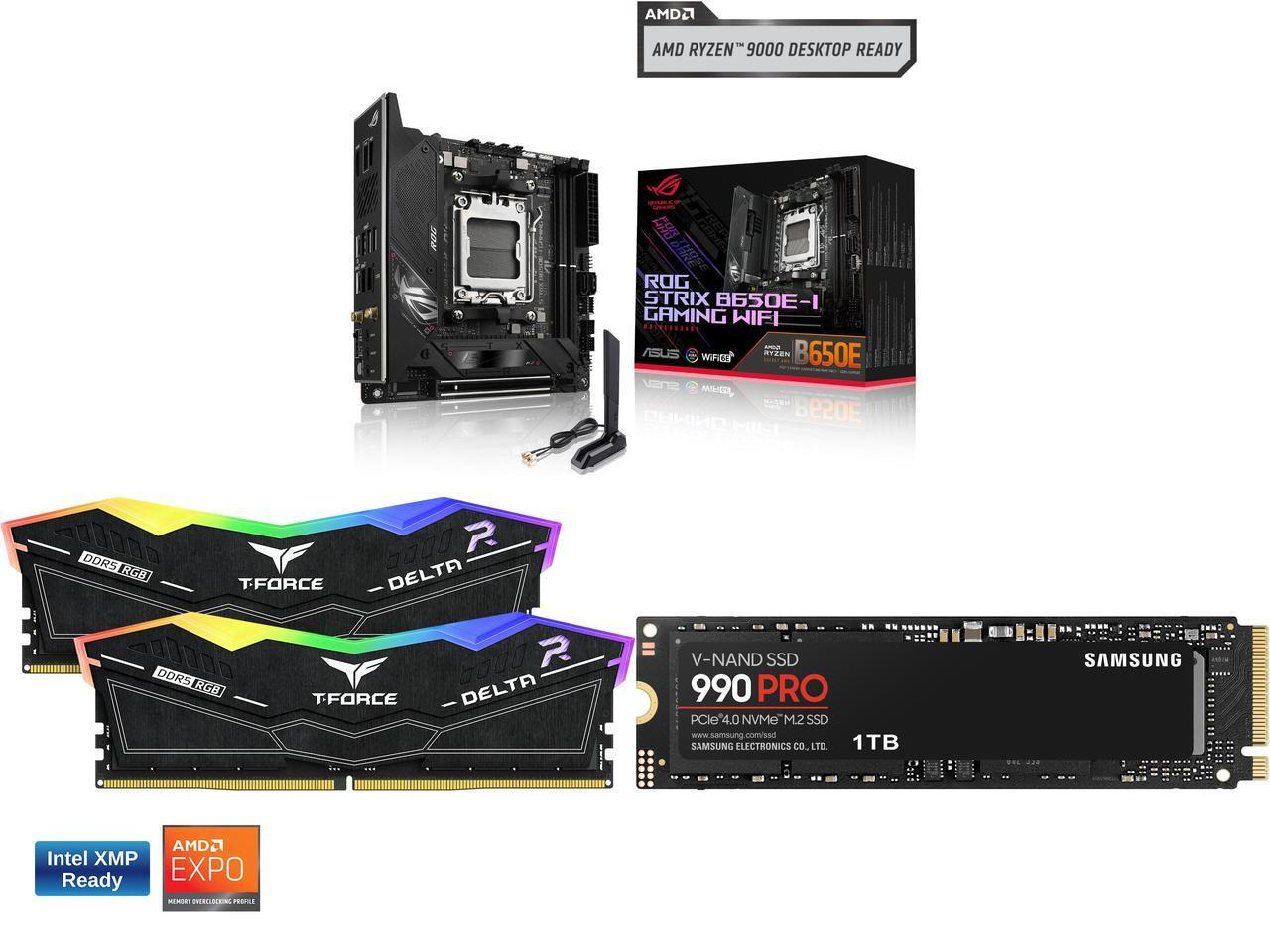
Motherboard / RAM / SSD : New Egg (US) Bundle for $469.99

  • ASUS ROG Strix B650E-I Gaming WiFi
  • 16GB (2×8) Team Group T-Force RGB DDR5-6000
  • Samsung 1TB 990 Pro NVME SSD


It’s not too hard to find decent deals these days if you look particularly at New Egg and Microcenter in the US. Bundling some of the slightly older components together is allowing resellers to drop the prices to feel almost reasonable…almost. Right now, New Egg (US) has the ASUS ROG Strix B650E-I Gaming WiFi ITX motherboard bundled with Team Group T-Force 16GB of DDR5-6000 and a 1TB Samsung 990 Pro NVME SSD for $469. This is a package saving of $189 compared to buying the parts separately. None of these are top-tier components, but they are all perfectly capable for this build. The motherboard can support up to Ryzen 9 class 16-core CPUs, and the SSD is an excellent performer. I would prefer 32GB of a RAM, but sometimes we take what we can get in the RAM crisis.


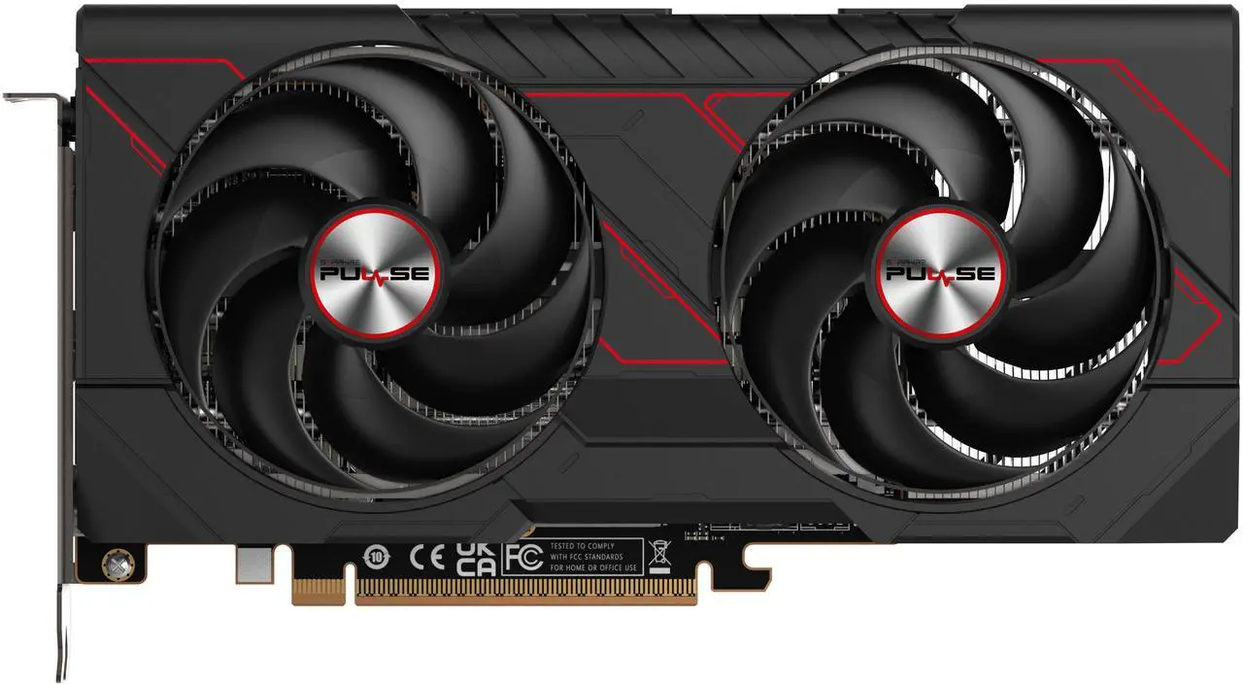
GPU: Sapphire Pulse Radeon RX 9060 XT 16GB for $429 at New Egg (US) 


The RX 9060 XT is substantially faster than the GPU in the Steam Machine, while doubling the available VRAM. It will allow older games to play at a true 4K, and newer games to play solidly at 1440P. It also natively supports FSR 4.1, and has AMD’s latest ray tracing cores. The most important part though is the 16GB of video memory. This is going to give our example build a far longer life than the Steam Machine would ever have. Combined with the much faster CPU, the RX 9600 XT takes performance to another league compared to the Steam Machine. Digital Foundry saw 60% to 70% gains in performance with the RX 9060XT vs the Steam Machine’s GPU.


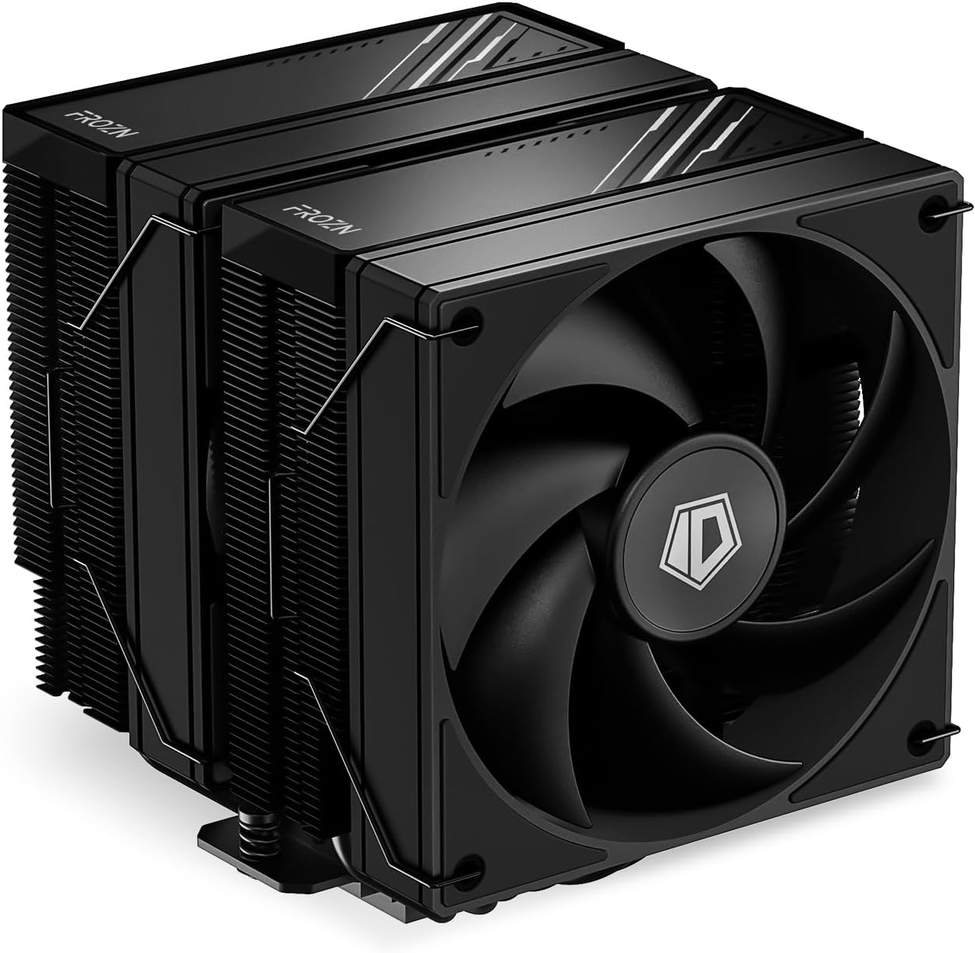
CPU Cooler: ID-COOLING FROZN A620 Black for $31 from Amazon (US)


ID-Cooling has come a long way over the last few years, and their dual 120mm fan Frozn A620 Black edition is a the perfect budget match for this build. Coming in at only $31, it has excellent performance that’s more than capable of quietly cooling the AMD Ryzen 9600X. Moreover, the Frozen A620 can even cool substantially hotter CPUs such as the Ryzen 9950X3D or Intel 270K if needed. The original A620 Pro SE, when tested by Hardware Canucks, successfully tamed an Intel 13900K at 253 Watts load with just 41dBA noise for an 87C core temperature. The value price makes it a no-brainer for this build.


Putting It All Together: 

Our parts are chosen. Let’s see how we did.

The total is $1,348. That places this build $1 behind the 2TB Steam Machine which lists for $1,349. It’s not as small as the Steam Machine admittedly, but in exchange you get substantially more power, infinite upgrade options, and the ability to still load SteamOS or Bazzite (Linux) if you want the console style experience. Admittedly, Steam Machine has our build beat for mass storage. However, that can be upgraded when prices come down whereas the Steam Machine’s GPU will always be what it is.

The negative factor here is that you need the skill, or access to someone with the skills, to build it. For most of our readers, this isn’t an issue. However, I completely understand that some people just want a turn-key pre-built solution. Don’t worry, I have a suggestion for that as well. Same rules must apply though. It needs to be upgradeable, small, and more powerful than the Steam Machine while still being close in pricing.

Pre-Built: MINISFORUM G1 PRO for $1,439 at Amazon (US) or directly from MINISFORUM 
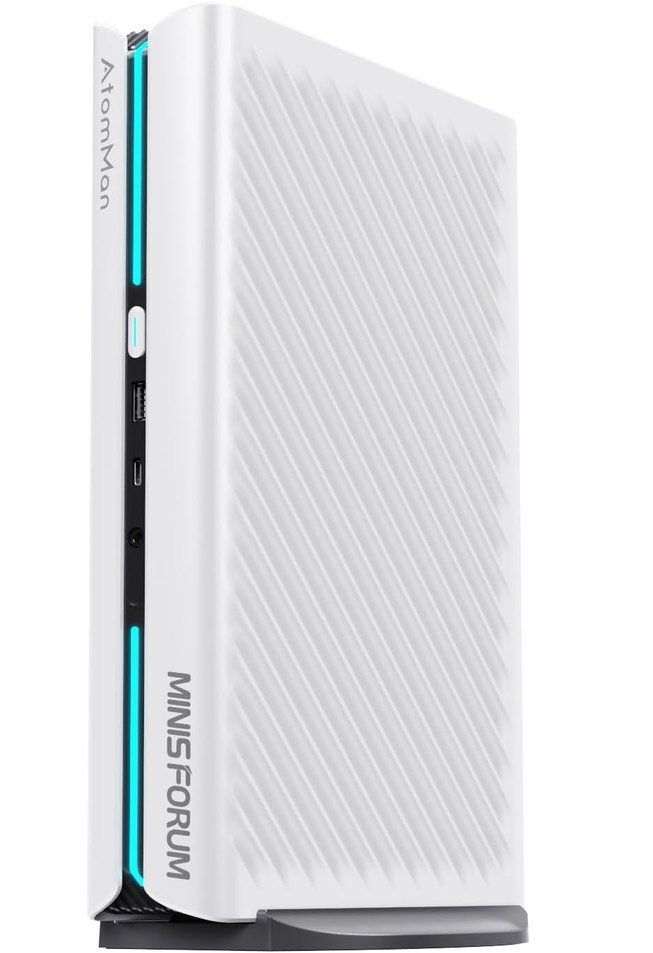


For $1,439 US dollars, MINISFORUM G1 PRO is packing some solid specs.

  • 16 Core Ryzen 8945HX CPU
  • 32GB DDR5-5200 SODIMM
  • 1TB NVME PCIe 4.0 Drive
  • RTX 5060 8GB Desktop GPU.
  • 5Gb Ethernet port
  • 3.8L in volume.


Looking like a more mature PS5 but packing 16 Ryzen Zen 4 cores with 64MB of cache, this SFF pre-built offers a really good value for the money in our current market. The GPU is upgradeable albeit with low profile GPUs. The PSU is an industry standard design, and can be easily replaced. The 32GB of RAM means you won’t be planning your upgrade before you even open the box.

However, there are a few things to consider. First, like the Steam Machine, that 32GB of memory is a single SODIMM. This will hinder memory bandwidth related tasks, but make it easy to upgrade to 64GB or more down the line. Second, you are tied to low-profile GPUs which aren’t exactly common. Third, the system is limited to approximately 250 watts combined power to keep temps in check. Finally, it uses an Nvidia GPU. If your goal was to run Linux on the machine, it may complicate things.

The Nvidia RTX 5060 8GB is roughly on par with the AMD RX 9060XT 8GB, and is still substantially faster than the GPU of the Steam Machine. One advantage of the RTX 5060 worth mentioning however is in Adobe Premier. Performance is faster than a RTX 4060Ti and matches that of a RTX 3080 for compute. Additionally, you get the latest CODEC support. For people developing the Adobe environment, it’s a strong selling point.

The MINISFORUM G1 PRO at $1,439 is within $11 of the highest priced Steam Machine. It gives you 10 additional Ryzen cores, double the main memory, and a substantially faster and upgradeable GPU. The Steam Machine does beat it for mass storage and includes a controller. That said, if you’re serious about doing work on your PC as well as gaming, the 16-Core Ryzen chip and 32GB of RAM makes the G1 PRO the clear choice.


Conclusion

Valve has unfortunately made it too easy to beat the value of the Steam Machine with both pre-builts and custom SFF PCs. It came to the market overpriced and under-powered. It’s very unfortunate. If it could have arrived close to the price of the PS5 base model, this article wouldn’t have been written. Sadly, it’s not the world we live in.

There is some good to this though. Valve has helped galvanize support of Linux game development. Moreover, the expanding Linux user base could entice more developers to make their software cross platform without translation layers being needed. Personally, I would love the day I can simply stop using Windows 11 in favor of Linux.

Moreover, the physical design of the Steam Machine hardware is an excellent foundation for future models, and has attracted more people to SFF computers. Let’s all hope that when prices come down, Valve can give us a true next-generation competitor with exceptional value.


Image Credit – Valve
Article written by Christopher Moine, Senior Editor SFFN
 
Valve had a rough day yesterday. The Steam Machine came to market packing much less power than it should, and costing far more money than everyone  hoped. Admittedly, it’s not entirely Valve’s fault. The AI induced RAM and NAND crisis had a large part to play in the matter. Valve won’t say what they wanted to price the Steam Machine for originally, but $699 to $799 is what was originally rumored. Even at that price, with the specs it has, it wasn’t going to be an easy sell against established gaming consoles such as the PS5 and Xbox Series X; both of which can match the Steam Machine’s performance. The value of the Steam Machine was going to be in the freedom it gave users to decide how to use that...

Continue reading...
 
Last edited by a moderator:

Revenant

Christopher Moine - Senior Editor SFF.N
SFFn Staff
Apr 21, 2017
1,799
2,903
USA
All right...I put my design for a Steam Machine out there. Let's see what everyone else thinks would make a good unit. Post your specs and thoughts below!
 

Phuncz

Lord of the Boards
SFFn Staff
May 9, 2015
6,123
5,031
Belgium
Outside from the excellent article, this also shows there's a lack of nice SFF cubic cases for quiet SFF APU builds or I've not browsed the forum enough.
 

Revenant

Christopher Moine - Senior Editor SFF.N
SFFn Staff
Apr 21, 2017
1,799
2,903
USA
Outside from the excellent article, this also shows there's a lack of nice SFF cubic cases for quiet SFF APU builds or I've not browsed the forum enough.

Thank you!

I have noticed that SFF cubes have become fewer and farther between. There was the Lazer3D LZX-8 is still around and available. That's a nice one. Silverstone has several cube and shoebox style cases. The nouvolo Borg is also a pretty nice cube design, and currently on sale.

 
  • Like
Reactions: Phuncz and rfarmer

hrh_ginsterbusch

SFF Guru
Nov 18, 2021
1,089
459
Germany
wp-devil.com
The nouvolo Borg is also a pretty nice cube design, and currently on sale.

It is nice, but has the major disadvantage of all the I/O ports pointing to the bottom. This also may result in having to get adapter extender cables, eg. for display / HDMI ports. One would wish for some sort of extender to route ports to the horizontal plane.

Compared to that, the main advantages over eg. the SG13 or SG16 are: Almost no transfer of vibrations to surrounding spaces, eg. your desk or in my case, a kallax shelf. Apropos kallax: It fits perfectly into one, with enough room to spare to all sides so that air flow is still mostly unimpeded. Also, it allows for relatively large CPU coolers - I'm currently using an SI-100 + Arctic P12 Max, but its supposed to allow for up to 145 mm CPU coolers, so even an NH-D12L or the recently released Silverstone XED120S should fit.

cu, w0lf.
 

Revenant

Christopher Moine - Senior Editor SFF.N
SFFn Staff
Apr 21, 2017
1,799
2,903
USA
It is nice, but has the major disadvantage of all the I/O ports pointing to the bottom. This also may result in having to get adapter extender cables, eg. for display / HDMI ports. One would wish for some sort of extender to route ports to the horizontal plane.

Compared to that, the main advantages over eg. the SG13 or SG16 are: Almost no transfer of vibrations to surrounding spaces, eg. your desk or in my case, a kallax shelf. Apropos kallax: It fits perfectly into one, with enough room to spare to all sides so that air flow is still mostly unimpeded. Also, it allows for relatively large CPU coolers - I'm currently using an SI-100 + Arctic P12 Max, but its supposed to allow for up to 145 mm CPU coolers, so even an NH-D12L or the recently released Silverstone XED120S should fit.

cu, w0lf.


I just went through that with the Raw S1. Good lord it's a pain in the ass to find quality right angle adapters. Soft extensions work better, provided they are also right angle.


Also, it's funny you mention the kalax because I have a SG05 in a kalax right next to me.
 

samsonbl4

Average Stuffer
Mar 11, 2026
61
30
37
I’m not a big fan of using off-the-shelf PC cases for a TV-based gaming setup. Small cube-shaped cases look nice, but when placed on a long, narrow shelf beneath the TV, they visually cut the space in half. Most console-style cases require air intake from both sides, meaning they can't be placed flush against the wall—plus, such a setup leaves cables hanging unsightly from the side. That's why I decided to design and custom-order slim cases for a flush-wall setup with downward-facing ports. It's a shame that such cases aren't available for purchase.
 

hrh_ginsterbusch

SFF Guru
Nov 18, 2021
1,089
459
Germany
wp-devil.com
I’m not a big fan of using off-the-shelf PC cases for a TV-based gaming setup. Small cube-shaped cases look nice, but when placed on a long, narrow shelf beneath the TV, they visually cut the space in half. Most console-style cases require air intake from both sides, meaning they can't be placed flush against the wall—plus, such a setup leaves cables hanging unsightly from the side. That's why I decided to design and custom-order slim cases for a flush-wall setup with downward-facing ports. It's a shame that such cases aren't available for purchase.
Well, technically speaking, there are some available, but maybe not in your region / country?

Also, what exactly do you mean with "both sides"? Most console-style cases I know of usually go for a "L"-shaped intake / exhaust option, so the 90° adjacent side may or may not have openings.

Also, if its specifically "hot box" design, eg. with only one opening, then the consumer market is the wrong place to look at. Chieftech and Inter-Tech got a few cases like that, but they'd probably be filed under "industrial PC cases".

cu, w0lf.
 

Arboreal

King of Cable Management
Silver Supporter
Oct 11, 2015
870
874
57
Sunny Bournemouth, UK
I just went through that with the Raw S1. Good lord it's a pain in the ass to find quality right angle adapters. Soft extensions work better, provided they are also right angle.


Also, it's funny you mention the kalax because I have a SG05 in a kalax right next to me.

I still have my original SG05 having had and parted with and SG05 and SG13.
It's running its 4th set of ITX components, this one an industrial board with 8th gen i5 and vertical DDR4 SODIMMS like a DeskMini
 
  • Like
Reactions: Revenant

samsonbl4

Average Stuffer
Mar 11, 2026
61
30
37
Well, technically speaking, there are some available, but maybe not in your region / country?

Also, what exactly do you mean with "both sides"? Most console-style cases I know of usually go for a "L"-shaped intake / exhaust option, so the 90° adjacent side may or may not have openings.

Also, if its specifically "hot box" design, eg. with only one opening, then the consumer market is the wrong place to look at. Chieftech and Inter-Tech got a few cases like that, but they'd probably be filed under "industrial PC cases".

cu, w0lf.
I’m referring to console-style cases with layouts like the Fractal Ridge or Node 202. Placing a case flush against the wall requires a layout like that of the SFFtime or Lian Li PC-O5, but such cases are hard to find. I found it easier to design the case myself, given that metal fabrication services have become accessible and I have years of experience as a design engineer.
I didn't consider "hot-box" design cases; on the contrary, I’m always drawn to cases with maximum perforation in the right places.
 

Revenant

Christopher Moine - Senior Editor SFF.N
SFFn Staff
Apr 21, 2017
1,799
2,903
USA
I still have my original SG05 having had and parted with and SG05 and SG13.
It's running its 4th set of ITX components, this one an industrial board with 8th gen i5 and vertical DDR4 SODIMMS like a DeskMini


SG05 was my first ITX build. It started as a Sandy Bridge Celeron and then to an Ivy Bridge 3550. It actually still is that setup because I use it as a retro XP machine.
 

Arboreal

King of Cable Management
Silver Supporter
Oct 11, 2015
870
874
57
Sunny Bournemouth, UK
My first ITX board was a Core 2 Duo MoDT board, then a Zotac 775 board that died, followed by an H81N that was great as it had an mSATA slot and was there for the longest time, until Win 11 meant an 8th get setup was needed.

Ironically the Ivy Bridge and Haswell setups (esp i5 and up), were still working well for basic tasks when I retired them.

My oldest setup currently is 6th gen i5 used for drive testing.
Long live retro kit, I haven't forgiven MS for making so much useable kit redundant, what a waste
 

hrh_ginsterbusch

SFF Guru
Nov 18, 2021
1,089
459
Germany
wp-devil.com
BTW: For the PSU - the FSP 850 is okayish, but it has one of the worst cable sets I've ever seen with ANY type of PSU. Its like Seasonic SFX cables, but the absolute garbage version. You clearly see and feel - esp. when trying to build with them - where they saved money.

Looking up stuff on Amazon.com, I found the Asus Loki 750 going for 144 USD. Also, the goat SF750 can be had as low as 142 USD (reduced offer, may not apply for everyone). That sound sooo much better in general term.


cu, w0lf.
 
  • Like
Reactions: Revenant

hrh_ginsterbusch

SFF Guru
Nov 18, 2021
1,089
459
Germany
wp-devil.com
European version of this (without FSP Dagger, but Seasonic SGX 750, and random "looks good enough" MB):

a) AM5: https://de.pcpartpicker.com/user/fwolf/saved/rw9H8d - costs about 200 Euro more than the US version, mostly because there arent any ITX bundles I know of (mATX? come dozens a dime)

b) AM4: https://de.pcpartpicker.com/user/fwolf/saved/qNRtK8 - its about 100 Euro cheaper than AM5, but the CPU is also less powerful

c) Intel 1851: https://de.pcpartpicker.com/user/fwolf/saved/WyvGnQ - about 150 Euro more expensive than the US version, but with a vastly superior CPU (i5-245k, 169 EUR, almost identically priced to the Ryzen 5 9600X)

cu, w0lf.
 
Last edited:
  • Like
Reactions: Revenant

Revenant

Christopher Moine - Senior Editor SFF.N
SFFn Staff
Apr 21, 2017
1,799
2,903
USA
BTW: For the PSU - the FSP 850 is okayish, but it has one of the worst cable sets I've ever seen with ANY type of PSU. Its like Seasonic SFX cables, but the absolute garbage version. You clearly see and feel - esp. when trying to build with them - where they saved money.

Looking up stuff on Amazon.com, I found the Asus Loki 750 going for 144 USD. Also, the goat SF750 can be had as low as 142 USD (reduced offer, may not apply for everyone). That sound sooo much better in general term.


cu, w0lf.


The cables aren’t great. I mentioned that when I reviewed it a few years ago. I picked it for the price for power but if Corsair is an option in that price bracket, I would pick it as well.
 

SaperPL

Master of Cramming
Oct 17, 2017
528
1,021
I missed this topic, but here's some good info about the price and performance:


Aside from the fact that ram and storage raised the prices, note that some people are willing to pay more for the PC to be quiet and we have our own example of people buying 600W Flex ATX PSUs for 300W systems to not have the 40mm fan on it screaming under load.
 
  • Like
Reactions: Arboreal

Revenant

Christopher Moine - Senior Editor SFF.N
SFFn Staff
Apr 21, 2017
1,799
2,903
USA
I missed this topic, but here's some good info about the price and performance:


Aside from the fact that ram and storage raised the prices, note that some people are willing to pay more for the PC to be quiet and we have our own example of people buying 600W Flex ATX PSUs for 300W systems to not have the 40mm fan on it screaming under load.


I've only done that...a few...dozen...times.
 

hrh_ginsterbusch

SFF Guru
Nov 18, 2021
1,089
459
Germany
wp-devil.com
The cables aren’t great. I mentioned that when I reviewed it a few years ago. I picked it for the price for power but if Corsair is an option in that price bracket, I would pick it as well.
I felt disgust about the same level as any shoddy case with "oh, we do all good BUT LOOK HERE: break-out PCIe slot covers! Saves moneyz!" - yuck.