
With the recent sale of Commodore to a group of enthusiasts – and the subsequent Commodore 64 Ultimate launch – the PC-in-a-Keyboard has returned to the fore of some enthusiasts’ thoughts. It’s the ideal form factor really – allowing you to have a completely clear desk, a thin screen, and as few wires as possible. Alas, the performance of such machines has understandably lagged behind since we moved on from Zilog Z80s and their ilk.
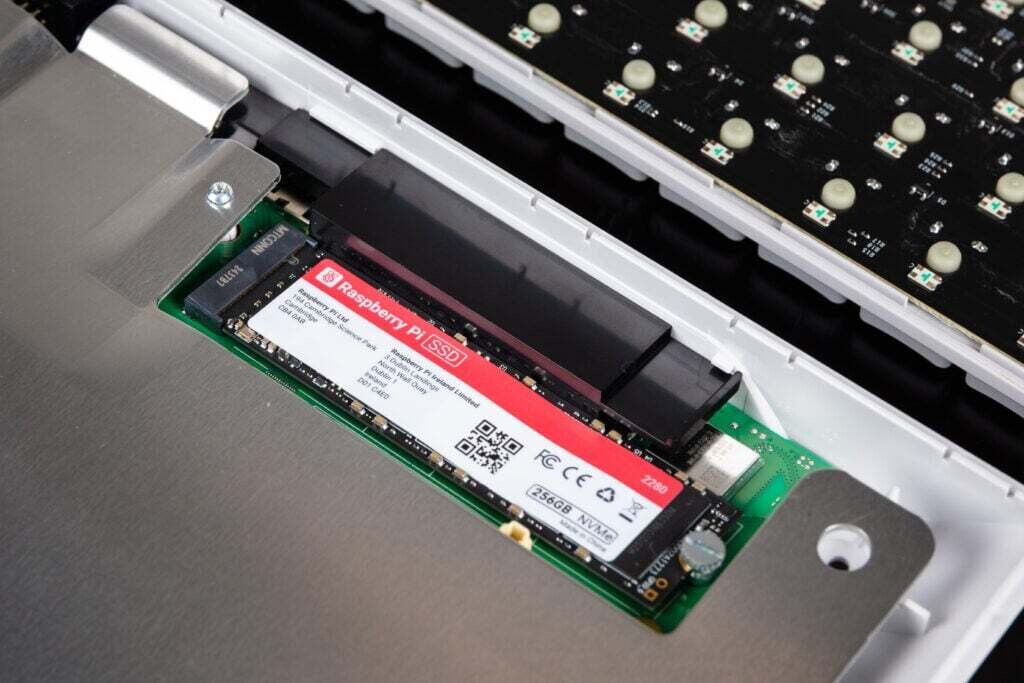
Everyone’s favourite (citation needed) Ultra-SFF SBC manufacturer, Raspberry Pi, seems to have been working on a successor to their Raspberry Pi 400 (launched in 2020 with 4 GB of RAM and an… ugh… membrane keyboard) and 500 (launched last year) models and have now launched the Raspberry Pi 500+, at a reported launch price of US$200. Including the keyboard (obviously), processor, 256 GB M.2 SSD and memory (again obviously, being that the Raspberry Pi ecosystem revolves around embedded systems), and taking to account the ongoing price inflation with each generation of the Pi (remember when you could get top-spec Pi for $35?!), it’s not a bad deal at all.
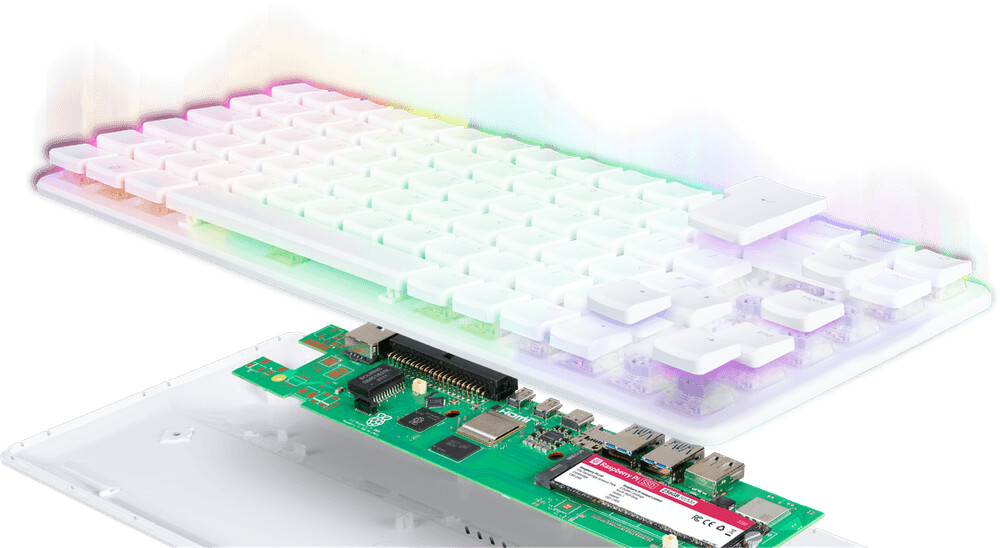
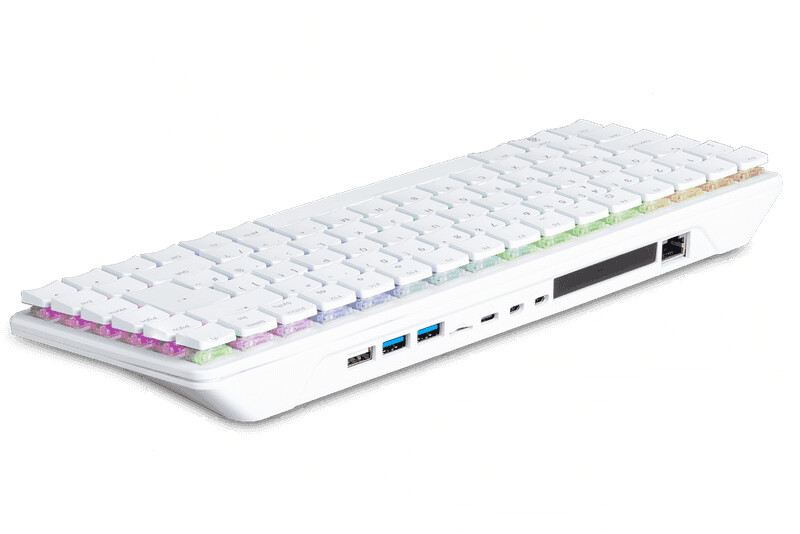
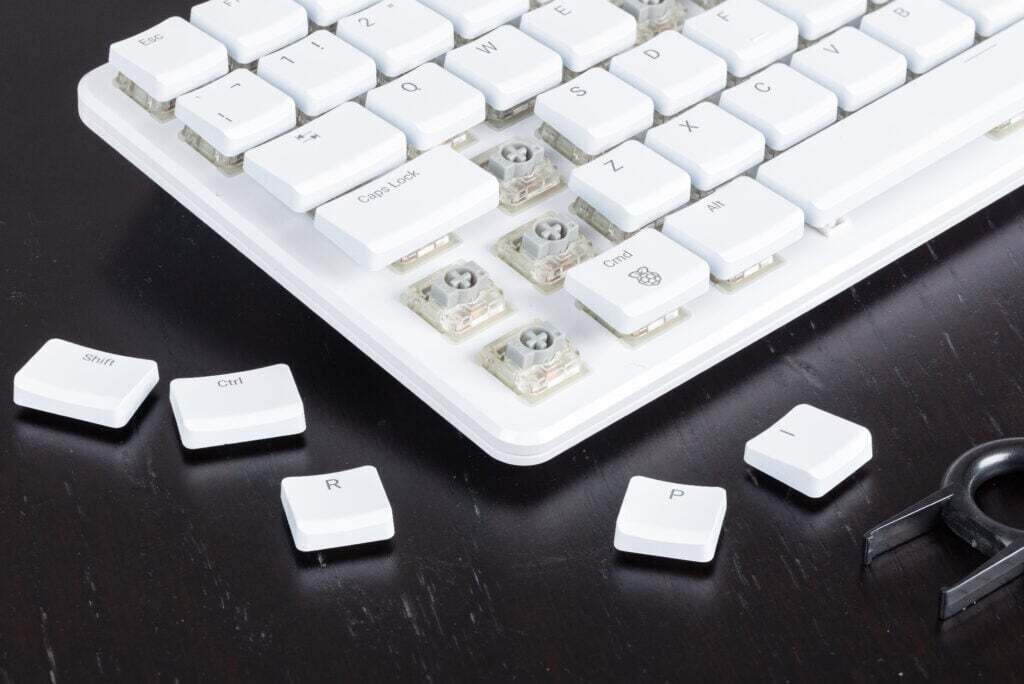
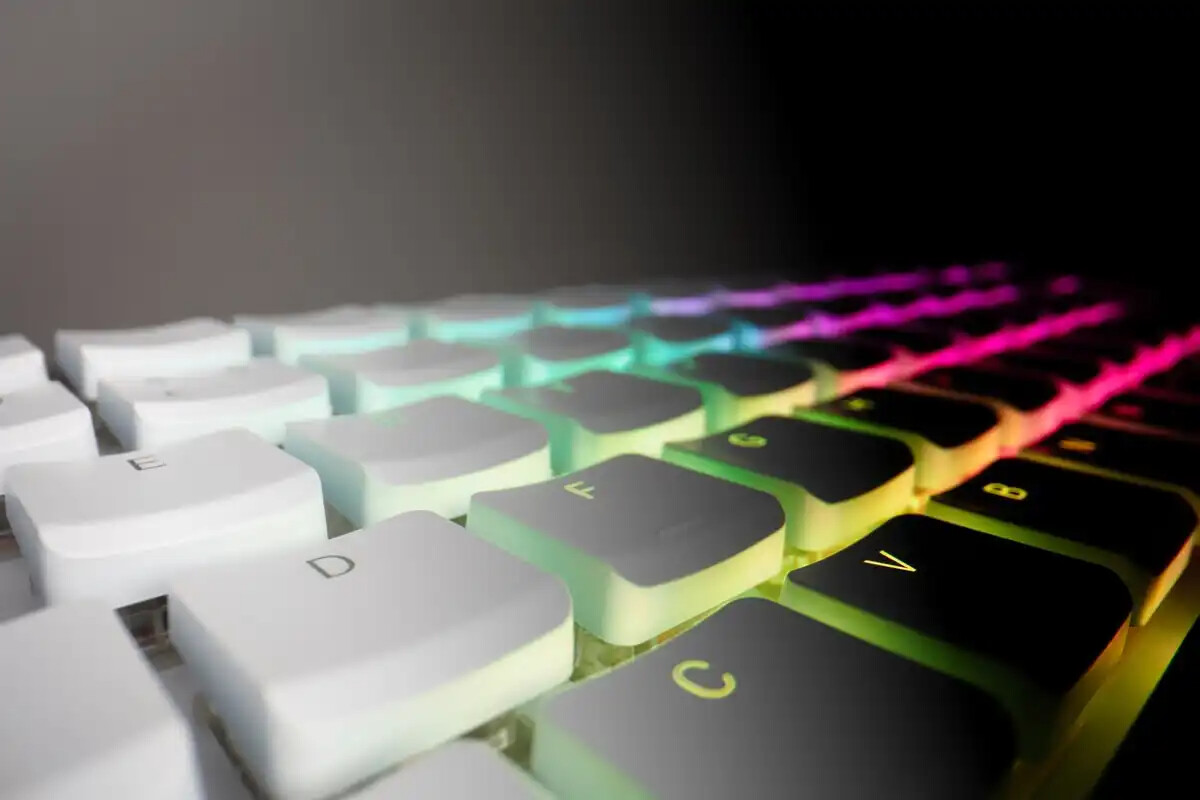
The keyboard is a 65%ish form factor, and uses Gateron KS-33 Blue switches, although confusingly with custom silver stalks. These keyswitches have RGB lighting, of course. Keycaps-wise, the Pi 500+ comes with low profile keycaps, in a painted, then laser etched, style. Only time will tell how long the paint will last in use. A keycap puller is included with the system.
As you can likely figure from the name, the 500+ is built on Raspberry Pi’s 5 platform. A Broadcom BCM2712 ARM Cortex-A76 SOC powers the 500+, a quad core unit running at 2,.4GHz. The system comes with 16 GB of LPDDR4X-4267 RAM soldered on – no upgrades here.
The integrated VideoCore VII GPU, supports OpenGL ES 3.1, Vulkan 1.2, and can support displays up to a pair of 4K 60 FPS units. I’m sure there are a bunch of benchmark results out there for those who are interested! These display outputs are available via the pair of micro HDMI ports.
Expansion, aside from the abovementioned micro HDMI ports, comes externally in the form of an RJ45 port for Gigabit LAN, 2 × USB 3.0 port and 1 × USB 2.0 port (all Type-A), a micro-SD slot, and the requisite GPIO header. Internally, there’s a 2280 form factor M.2 slot – in the PCIe 2.0 flavour. WiFi’s included, a Dual-band (2.4GHz and 5.0GHz) IEEE 802.11b/g/n/ac Wi-Fi® chipset, also including Bluetooth 5.0/BLE.
If you feel like throwing another $20 towards the deal, Raspberry Pi will include a branded mouse, a 27W USB-C power supply, a 2 metre micro HDMI to HDMI cable, and a copy of their publication, the Raspberry Pi Beginner’s Guide – 5th Edition.